


See our catalogue and wholesale terms before you plan an island load.
Summary: Made in Jepara, Indonesia. FOB Semarang, one 20ft container with mixed models. Local reporting in September 2026 put the island's hotel pipeline at more than 7,000 rooms and around USD 1.49 billion in associated private investment, with new properties landing through 2026 and 2027 — among them a 297-room TUI Blue and an all-inclusive Marriott Autograph Collection resort opening in November 2026.

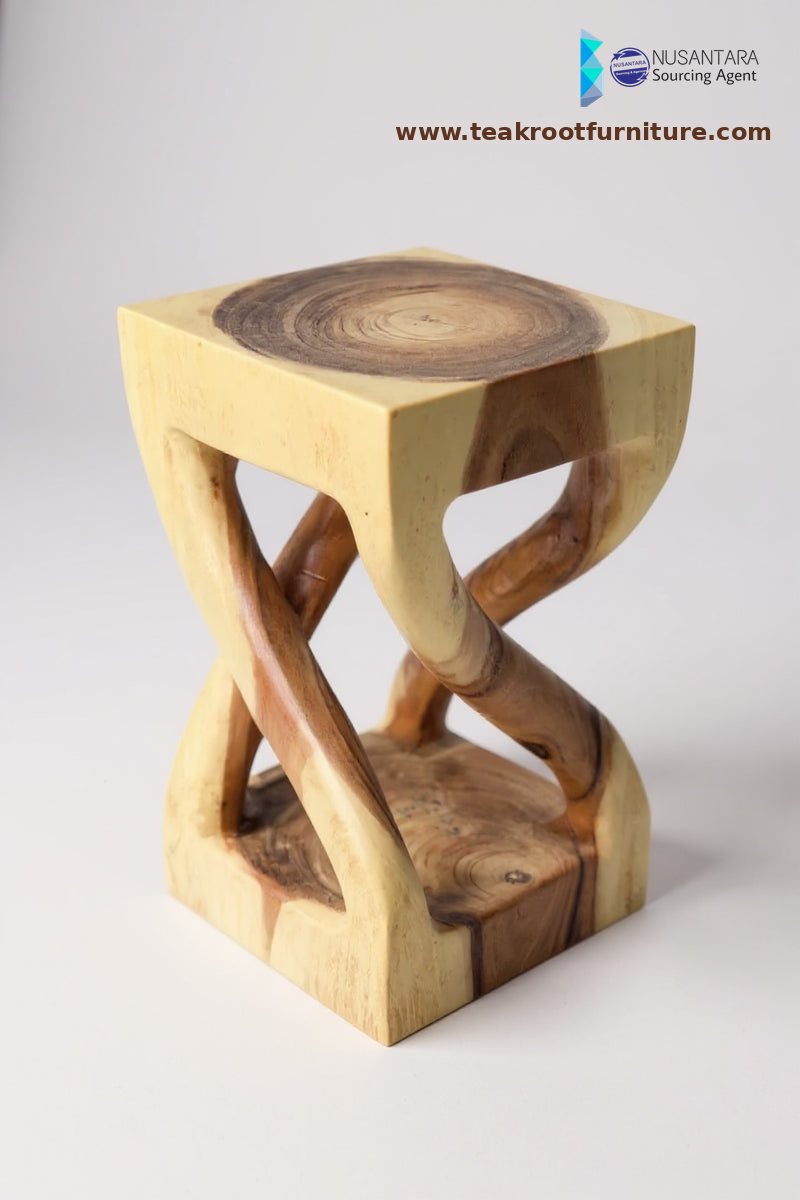
The Caribbean closed 2025 with more than 34 million stay-over arrivals and visitor receipts of roughly USD 46 billion, on a spend of about USD 182 a day per visitor. Behind those arrivals is construction, and behind the construction is furniture. On Aruba, Bonaire and Curaçao, a compact, high-spend tourism economy keeps renovating and reopening properties on a tight seasonal clock, and that clock decides when a container must sail.
The Caribbean is not a slow market any more. The region closed 2025 with more than 34 million stay-over arrivals and visitor receipts of roughly USD 46 billion, on a spend of about USD 182 a day per visitor (Hope Research Group, Caribbean tourism data 2026). Behind those arrivals is construction, and behind the construction is furniture. Nowhere is that clearer than the ABC islands — Aruba, Bonaire and Curaçao — where a compact, high-spend tourism economy keeps renovating and reopening properties on a tight seasonal clock. For buyers planning to import teak root furniture from Indonesia, that clock is the whole game: everything is specified in Jepara, Indonesia months before the season opens.
Curaçao is the loudest example. Local reporting in September 2026 put the island's hotel pipeline at more than 7,000 rooms and around USD 1.49 billion in associated private investment, with new properties landing through 2026 and 2027 — among them a 297-room TUI Blue and an all-inclusive Marriott Autograph Collection resort opening in November 2026. Aruba continues to add rooms and refurbish existing resorts, and Bonaire works at smaller scale through villas, dive resorts and boutique properties.
This article is written for the buyers on those projects: hospitality FF&E contractors, interior designers, resort owners and importers supplying the islands. It sets out what the ABC islands are building next, what a container of teak root furniture costs to land, how to move it to an island, and how to build a first order that arrives before the season opens.
What the ABC islands are building next
Three patterns shape demand across the three islands. On Curaçao, large new-build resorts and all-inclusive conversions are specifying loose furniture for lobbies, restaurants, pool decks and bars, with openings planned through 2027. On Aruba, established resorts renovate on a rolling cycle to stay competitive, which means repeat orders for restaurants, beach bars and suites rather than one-off projects. On Bonaire, the volume is smaller but the spend per key is high: dive resorts, boutique hotels and private villas that want a signature piece rather than a standard catalogue table.
The design direction across the islands has moved toward warm, organic and tactile — natural grain, sculptural silhouettes and materials that hold up in salt air and strong sun. That is exactly the register teak root furniture sits in. Teak is naturally oily and moisture-resistant, which is why it has been a boat-deck timber for generations, and a root piece is dense and heavy enough to stay put on an exposed terrace. Each piece is built from the root mass rather than a straight board, so no two bases are identical and every surface shows the movement of the grain.
In practice we see three island patterns. First, sculpted root bases under glass or stone tops for hotel restaurants and lobby bars, where the base reads as a piece of art while the top stays practical for service. Second, root consoles, coffee tables and clustered root stools for villas and beach clubs, where a unique silhouette is worth more than a repeatable one. Third, root planters and bowls for terraces and entrances, which take sun and rain without the constant refinishing that lighter woods need.
Planning a first order? Send your item list and quantities, and we will come back with what fits in a container, the FOB Semarang price and a realistic timeline.
Request FOB prices and a load planBuild a container load →
The landed-cost maths worth running before you negotiate
Island importers usually negotiate on FOB price and only discover their real cost after the container has cleared. On small islands the surprises sit in freight, transhipment and local taxes rather than in the tariff itself. The table below is the sheet worth building before you compare two suppliers.
| Cost line | How it is set | Practical note |
|---|---|---|
| FOB Semarang | Quoted per container | The only figure you can compare factory-to-factory on equal terms. |
| Ocean freight | Rate per 20′FCL | Island routes usually involve a transhipment through a regional hub; confirm the live rate with your forwarder. |
| Marine insurance | A small percentage of CIF value | Worth carrying: solid wood pieces are heavy and awkward to handle. |
| Import duty & local tax | Set by each island, by product | Aruba, Bonaire and Curaçao each run their own regime. Bonaire, as part of the Caribbean Netherlands, applies its own general expenditure tax on goods and generally exempts goods arriving from the Netherlands and the EU; Curaçao and Aruba apply their own turnover taxes. Confirm the current rate with a local customs broker. |
| Port & handling | Quoted by the local agent | Island terminals are small; handling and storage charges can be a larger share than on a mainland port. |
| Local delivery | Quoted by the island forwarder | Distances are short but roads and access to a resort site are the real constraint; quote delivery to the property. |
Two features of island buying change this maths. First, everything has to arrive by sea, and a missed sailing can be weeks rather than days, so the seasonal deadline — not the price — is usually the risk that matters most. Second, the three islands are not one customs area: Aruba, Bonaire and Curaçao each administer their own duties and local taxes, so figures cannot be carried from one island to another.
How a container reaches each island
FOB Semarang leaves the routing to you. On island routes the real question is which regional hub the cargo tranships through, and which local agent handles the last mile.
| Island | Gateway | What to know |
|---|---|---|
| Curaçao | Willemstad | A deep-water port and the most active of the three for both cargo and cruise traffic; host to the largest share of the current resort build-out. |
| Aruba | Oranjestad and Barcadera | Barcadera handles commercial container traffic while Oranjestad serves the cruise and tourist core; a mature supply chain for resort refurbishments. |
| Bonaire | Kralendijk | A smaller terminal with less frequent direct sailings; expect a transhipment leg and plan the schedule around it. |
| Regional hub | Depends on carrier | Most Far-East cargo feeds into the islands through Caribbean transhipment ports; ask your forwarder to price the whole chain, not just the ocean leg. |
In practice a Curaçao project is the simplest of the three to route, an Aruba refurbishment benefits from a mature container supply chain into Barcadera, and a Bonaire delivery needs the longest lead time because sailings are fewer. Ask your forwarder for an all-in landed quote to the property, not to the port — the FOB price is identical either way, so the routing and the last mile are where the cost lives.
DATA SHEET - FROM OUR FOB 2026 PRICE LIST
Models that leave the factory most often (FOB Semarang, delivery to Willemstad / Oranjestad)
| Model | CBM/pc | FOB | Max pcs in one 20ft |
|---|---|---|---|
| Cabak Dining Table dia 100 cm | 0.75 | USD 195 | ~32 pcs |
| Cabak Dining Table dia 120 cm | 1.08 | USD 265 | ~22 pcs |
| Cabak Dining Table dia 150 cm | 1.8 | USD 340 | ~13 pcs |
| Mawar Dining Table dia 120 cm | 1.08 | USD 265 | ~22 pcs |
| Mawar Dining Table dia 150 cm | 1.69 | USD 340 | ~14 pcs |
| Mawar Dining Table dia 200 cm | 2.43 | USD 650 | ~9 pcs |
Max pcs = if the container carries that model only, using 24 CBM of usable space.
A worked mixed load - 24 pieces, 22.78 CBM, FOB USD 5,310
| Item | Qty | CBM | FOB |
|---|---|---|---|
| Cabak Dining 120 cm | 8 | 8.64 | USD 2,120 |
| Mawar Dining 150 cm | 6 | 10.14 | USD 2,040 |
| Izpo Coffee Table 100 cm | 10 | 4.00 | USD 1,150 |
Border cost for this load into the ABC islands
| Goods, FOB Semarang | USD 5,310 |
| Ocean freight (example rate) | USD 2,400 |
| Insurance 0.5% | USD 39 |
| CIF value | USD 7,749 |
| Duty: per your tariff line (confirm with your broker) | not included |
| turnover tax (ABB) 6% | USD 465 |
| Landed, before duty, broker and port fees | USD 8,213 |
Freight is an example rate, quoted per sailing. turnover tax (ABB) is the standard rate and is recoverable if you are registered. Duty depends on your tariff line and on the origin certificate; confirm both with your broker. Broker and port charges are set at destination and are not included. Product figures come from our FOB 2026 price list.
Making the first order safe
Island buyers tend to work to a season, not a quarter. The orders that go smoothly share a few habits.
- Start with a mixed container. A single 20-foot container can carry a teak root dining table, a root coffee table with a glass top, several root stools or benches, a root console and a few root planters or bowls. That lets a buyer judge finish and packing quality before committing to the volume a full property needs.
- Order early enough for the sailing. Production on a first order runs about 12 weeks from confirmed deposit, and island freight — especially with a transhipment leg — adds weeks more. The season will not move, so the order has to.
- Send a comparable RFQ. Give the same specification, finish and packing requirements to every supplier, so the quotes you compare are genuinely like for like.
- Fix the finish for the climate in writing. Colour, sheen and top material (glass, stone or solid) should be agreed before production, and any outdoor piece should be specified for sun and salt air from the start.
Where these pieces come from
Every piece in an island load is made in Jepara, Indonesia — a town on the north coast of Central Java that has carved teak for generations. A root piece does not begin as a plank; it begins as the root mass itself, cleaned, dried and then shaped so the natural movement of the wood becomes the design. Drying is the slow part and the part most affected by the weather, because a root holds more moisture than a straight board and will move if it is rushed. That is why a first order runs weeks rather than days, and why the workshops here optimise for stability rather than speed.
We are CV. Nusantara Sourcing Agent, producing in Jepara since 2016 and loading four 40-foot containers a month for importers, hotel groups and interior contractors in Europe and North America. Over 300 containers have left since we started. A buyer is welcome to visit the factory and inspect a load before it ships — that inspection is part of how we work, not an exception.
Frequently Asked Questions
Do Aruba, Bonaire and Curaçao charge the same import taxes?
No, and this is the most common misunderstanding. Each island administers its own regime. Bonaire, as part of the Caribbean Netherlands, applies its own general expenditure tax on goods and generally exempts goods arriving from the Netherlands and the EU, while Curaçao and Aruba apply their own turnover taxes. Ask a local customs broker for the current rate on your product code before you fix your landed cost.
How long does shipping to an island take?
Sea freight from Semarang to the Caribbean almost always involves a transhipment through a regional hub. Curaçao and Aruba have more frequent sailings than Bonaire, which has a smaller terminal. Budget several weeks for freight on top of about 12 weeks of production for a first order, and plan around the season rather than the calendar.
Can a single villa or a small resort order just one container?
Yes. The minimum is one 20-foot container with mixed items, so a villa, a dive resort or a small boutique property can combine a teak root dining table, a root coffee table with a glass top and a few root stools in one load. A first order runs about 12 weeks in production, with a 50 percent deposit and the balance before shipment.
Will teak root furniture survive on an open terrace by the sea?
Better than most alternatives. Teak is naturally oily and moisture-resistant, which is why it has long been used for boat decks, and a root piece is dense and heavy enough to stay put in wind. Any solid-wood piece benefits from being kept out of standing water and from periodic oiling if it lives fully outdoors, and a glass or stone top is worth specifying for pieces that serve food and drink.
Talk to us about your project
Tell us which island the project is on, what the spaces need and when the season starts. Send your item list to our quote form, email export@teakrootfurniture.com or message WhatsApp +62 852 0600 7878, and we will reply with a FOB Semarang quotation and a realistic timeline — usually within one business day.
Packing, loading and shipping
Every order is packed with protective wrapping, stacked to a load plan and staged before it leaves the factory. We list each piece so that what arrives matches what was ordered, and we can supply a container load plan for your customs broker.
Where does the container actually leave from?
Port of loading: Semarang, Central Java. The factory is inland by about two hours, so we build the load plan in Jepara, check the cartons against it and only then release the truck.
We have handled this route repeatedly for Caribbean buyers, so the paperwork and timings are routine for us.
Our office and factory stand at the same address on every document we issue: Jl. RA Rukmini KM.02 Pekalongan RT.02/V, Tahunan, Jepara 59428, Central Java, Indonesia.
MOQ 1×20'FCL mixed · 4×40'FCL per month · 300+ containers shipped since 2016 · export@teakrootfurniture.com
Written by
Mr. August Praymunor — Overseas Marketing Director
CV. Nusantara Sourcing Agent · manufacturer and exporter of teak root furniture in Jepara, Central Java, Indonesia. We have shipped over 300 containers since 2016, loading 4×40’FCL per month for importers, hotel groups and interior contractors in Europe and North America. Every figure in this article comes from the sources noted in the text or from our own shipping records.
export@teakrootfurniture.com · WhatsApp +62 852 0600 7878 · LinkedIn · Jl. RA Rukmini KM.02 Pekalongan RT.02/V, Tahunan, Jepara 59428, Central Java, Indonesia
See also
- Teak Root Furniture Wholesale for US Importers and Designers
- Teak Roots for Florida's Hotels and Villas
- Teak Roots for Atlanta Hospitality
- Our teak root furniture range
- Furnishing Gulf Hotels with Teak Root Furniture
- Understanding Furniture Import Duty in Oman: A Buyer's Guide
- Teakholz Esstische & Couchtische für Deutschland & Österreich
- Teakmøbler i teakrot for Norge | Spisebord & Sofabord fra Jepara
- Videos
- Teak Root Coffee Tables & Consoles for Norway | Bulk
Nederlandse pagina : lees onze Teakhouten Meubelen - Fabrikant & Exporteur in Jepara, Indonesie (groothandelsprijzen, voorwaarden en catalogus in het Nederlands). Bonaire en Curaçao zijn Caribisch Nederland - dezelfde voorwaarden gelden.
Model pages — price, CBM and container load
One page per model: size, packed volume, FOB Semarang price and how many fit in a 20ft container.
- Mawar Dining Table dia 200 cm — USD 650 · 2.43 CBM
- Oval root dining table 200 cm — USD 365 · 1.50 CBM
- Cabak Dining Table dia 150 cm — USD 340 · 1.80 CBM
Where to go next
0 comments:
Post a Comment