


Two numbers decide what a container of Indonesian teak root furniture costs in 2026: 30 December 2026, when the EU Deforestation Regulation begins to bite on wood products including furniture, and 19%, the reciprocal tariff the United States applies to most Indonesian goods after the July 2025 agreement. Neither appears on a price list. Importing is not complicated, but it is unforgiving of guesswork, so fix the specification and the Incoterm before comparing prices.
Summary: Made in Jepara, Indonesia. FOB Semarang, one 20ft container with mixed models. First, on this lane the duty is nil — the cost at the border is VAT, and VAT is recoverable for a registered business, so the number that stays with you is closer to US$13,750 plus clearance.

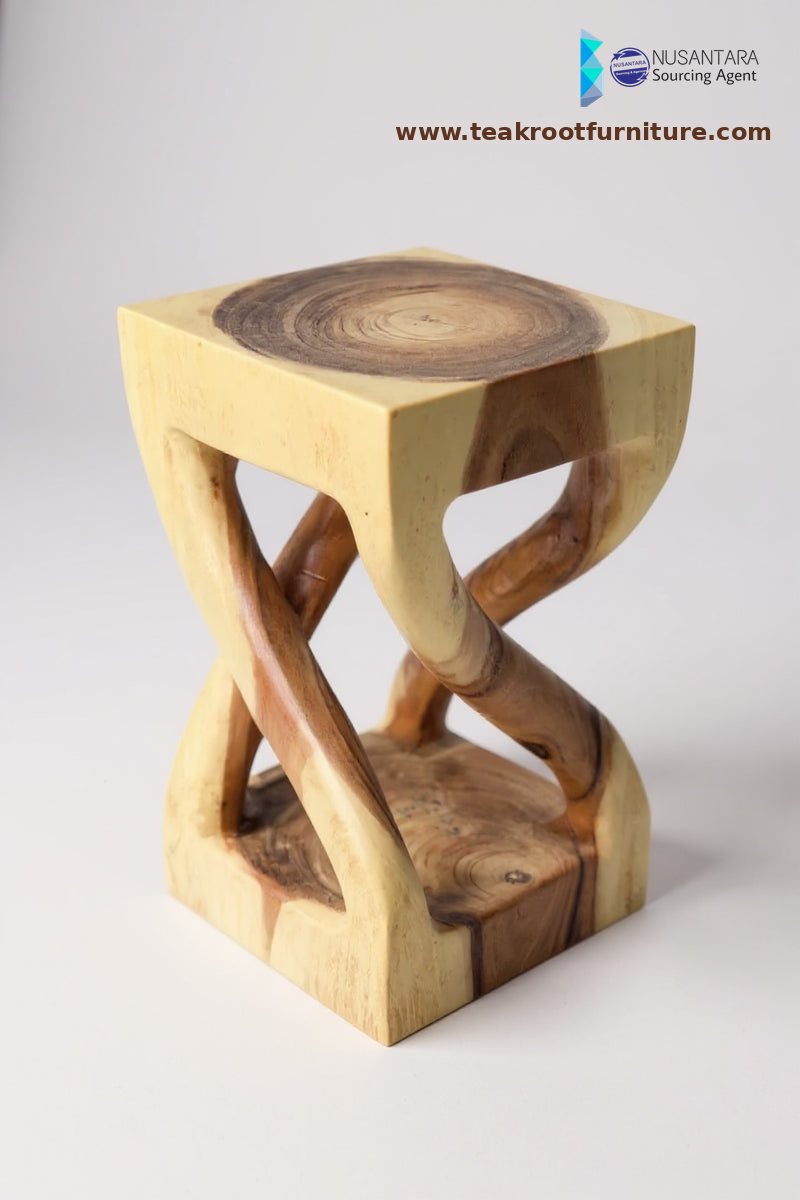
Two numbers should sit on the desk of anyone buying Indonesian teak root furniture in 2026. The first is 30 December 2026 — the date the EU Deforestation Regulation (EUDR) starts to bite on wood products, furniture included. The second is 19% — the reciprocal tariff the United States now applies to most Indonesian goods, agreed in July 2025. Neither number appears on a furniture price list. Both change what a container actually costs you.
Importing from Indonesia is not complicated, but it is unforgiving of guesswork. Buyers who follow a clear sequence get the container loaded and cleared on time. Buyers who improvise lose weeks to documents and revisions, usually at the worst moment. What follows is that sequence, in the order it should happen, with the costs and the paperwork spelled out. If you are planning to import teak root furniture from Indonesia, treat this as the checklist we hand to our own buyers — written from the workshop floor in Jepara, Central Java.
Why 2026 is a different year to import
The regulatory ground has shifted in three places at once, and each one touches teak root furniture directly:
- Europe. The EUDR starts applying to wood — one of the seven regulated commodities — from 30 December 2026 for medium and large operators, and from 30 June 2027 for micro and small operators (European Parliament, December 2025). A due diligence statement with plot-level geolocation and legality evidence must be filed, and the customs declaration needs the EUDR reference number attached, or the goods cannot be processed.
- The United States. Under the US–Indonesia trade deal announced on 16 July 2025 and set out in the White House fact sheet of 22 July 2025, Indonesian goods enter the US at a 19% reciprocal rate — down from the 32% threatened earlier in 2025, but real money on a furniture container. The total US goods trade deficit with Indonesia ran to $23.7 billion in 2025 (White House, February 2026), which is why the tariff file stays live.
- The source. Indonesia still requires a V-Legal document under its timber legality system (SVLK) for timber exports. That document travels with your shipment and is the paper most often asked for by a European or American customs broker.
Indonesia’s furniture and craft exports reached US$2.22 billion in the eleven months to November 2024, with the United States, Japan, the Netherlands, Germany and Belgium the largest destinations (Indonesian Ministry of Trade, February 2025). Teak root pieces are a small, high-value slice of that trade, and they are unusually exposed to the paperwork because every piece is wood.
Step 1: Fix the specification before you ask for a price
If you are preparing a first import, send your item list and target quantities to export@teakrootfurniture.com or WhatsApp +62 852 0600 7878. We will confirm MOQ, packing, FOB Semarang terms and the documents you will need.
Every usable quotation starts from four numbers: the products, the sizes, the quantities and the finish. A supplier can only price accurately once those are fixed, and a vague enquiry returns a vague number you cannot put beside anyone else’s. Write your enquiry as a table — item, size, quantity, finish — and, if you are still deciding, ask for a spread rather than a single item: a teak root dining table in three diameters, a root coffee table with glass top in two heights, a root console in two lengths.
The details people forget sit under the surface: glass thickness and edge type for a root coffee table with glass top, whether the glass ships in the same carton or separately, the stool and bench heights around a dining table, and whether you want retail barcodes on the carton. Each changes both the price and the packing.
Step 2: Quote on the same Incoterm, or the comparison is meaningless
Compare like with like. Ask every supplier to quote on the same two bases: FOB the nearest port and CIF your own port. A mix of FOB, CIF and ex-works cannot be compared, and the cheapest-looking figure is usually the one with the least included. In this trade FOB Semarang is the standard term, because that is where the container is loaded and where the exporter’s cost stops.
| Incoterm | Exporter covers | You cover |
|---|---|---|
| FOB Semarang | Production, packing, inland haul to Semarang, loading on board | Ocean freight, insurance, duty, VAT, clearance and onward delivery |
| CIF your port | As FOB plus ocean freight and marine insurance to your port | Duty, VAT, clearance and onward delivery |
Asking for both on one quotation costs a supplier nothing and tells you immediately how much of the total is freight and how much is goods — the number you negotiate is the goods line, not the freight.
Tell us what you need. Send your item list and quantities, and we will reply with what fits in a container, the FOB Semarang price and the production timeline.
Step 3: Build the landed-cost model before you negotiate
The invoice price is the smallest part of the story. Here is a worked model for a mixed 40’HC of teak root furniture — dining tables, a root console or two, stools and a few sculptural pieces — landing in the Netherlands. Substitute your own figures; the structure is what matters.
| Line | Illustrative amount |
|---|---|
| Goods, FOB Semarang | US$12,000 |
| Ocean freight + insurance to Rotterdam | US$1,500 |
| CIF value (duty base) | US$13,500 |
| Import duty, CN 9403 60 10 (dining/living-room wooden furniture, 0%) | US$0 |
| Import VAT, Netherlands 21% on CIF + duty | US$2,835 |
| Clearance, brokerage, port handling (indicative) | US$250 |
| Landed cost | ~US$16,585 |
Two things follow. First, on this lane the duty is nil — the cost at the border is VAT, and VAT is recoverable for a registered business, so the number that stays with you is closer to US$13,750 plus clearance. Second, the same container into the United States behaves differently: add the 19% reciprocal rate to the dutiable value and the border cost stops being a rounding error. Model both before you choose a market.
A word of caution on the duty figure. EU duty depends on the exact eight-digit subheading. Wooden furniture used in dining rooms and living rooms (CN 9403 60 10) sits at 0%, which is where most teak root tables, consoles and stools classify; other wooden furniture can sit higher. Get your broker to confirm the subheading against your specific item before you rely on a rate — the difference between subheadings is bigger than any negotiating margin you will win.
Step 4: Line up the documents while production runs
Do not wait for the goods to be finished before thinking about paperwork. Send your supplier the exact document list your customs broker wants, and confirm the HS code for each product type. The usual set is short, but every line can hold a container:
| Document | Who issues it | Where it jams |
|---|---|---|
| Commercial invoice + packing list | Exporter | Piece counts that do not match the cartons — the single most common clearance delay |
| Bill of lading | Carrier / forwarder | Consignee or notify party spelled wrongly; arrange the release type early |
| Certificate of origin | Indonesian trade authority / chamber | Missing, so a preferential treatment is lost at the border |
| V-Legal document (SVLK) | SVLK-licensed Indonesian body | Not issued per shipment; the legality proof EU and US buyers now expect |
| ISPM 15 marking on wood packaging | Treatment facility | Unstamped pallets or crates; goods can be refused or re-treated at your cost |
| EUDR due diligence statement + reference no. | You, the EU importer | Required for wood from 30 December 2026; without it the entry is rejected |
| EORI number | EU customs (your registration) | No EORI, no entry — register before the first shipment, not during it |
Step 5: Check the certificate, not the brochure
Timber legality is the point where a slick supplier and a solid one part company. Ask for the SVLK certificate number and the V-Legal process, and check that the entity on the certificate matches the entity quoting you. A trader who simply buys from a workshop and cannot produce the legality paperwork will pass that gap on to you at the border. Ask, too, where the raw root is sourced and whether the workshop works only with legally felled or reclaimed material — a question European importers will have to answer themselves under the EUDR.
Step 6: Inspect at loading, not at arrival
Ask for photographs of the finished goods and of the loaded container before it leaves, and ask for a load plan you can reconcile on arrival. A container loaded to a plan and photographed settles most claims before they start. If your order is large enough, a third-party inspection before loading costs a fraction of one damaged dining table.
What actually delays an Indonesian container
The theory is simple; the calendar is not. Four forces show up again and again:
- Peak season. North European and US retail demand clusters from late summer into autumn, so space from Semarang tightens and freight rates firm from around September.
- Chinese New Year and the Ramadan/Lebaran period. Carrier schedules thin and factory labour drops during Lebaran, typically a week or more of lost production each year. A first order placed in that window can slip a month.
- Rainy season. Root is dense and needs real drying time. In the wet months, drying — not carving — sets the pace, and rushing it is how a table cracks six months later in a hotel lobby.
- Document timing. V-Legal, certificate of origin and (from 2026) the EUDR statement all run on their own clocks. Late paperwork does not delay the ship; it delays the goods after the ship has sailed, which is worse.
Where these pieces come from
Most of the world’s carved teak root furniture comes from Jepara, on the north coast of Central Java, a town that has worked wood for centuries. The material is the root mass left when a teak tree is felled — dense, irregular, and useless for planks, which is exactly why it suits a table base. Each root is cleaned, dried, brushed and stabilised by hand; the natural voids that survive are what give a root coffee table with glass top its shape. No two are identical, and a buyer who needs 200 identical pieces is in the wrong material. Most of the pieces buyers import teak root furniture from Indonesia for — dining tables, coffee tables with glass tops, consoles, stools and planters — are cut, dried and finished within a few kilometres of each other in Jepara, Indonesia, which is why lead times stay predictable even in peak season.
The work is seasonal and human. Workshops empty for Lebaran, fill again through the dry months, and slow when the rain makes drying unreliable. That rhythm — not a marketing calendar — is what a 12-week first-order lead time is built on. We load four 40’FCL a month and have shipped over 300 containers since 2016, which is a modest record by national standards but enough to know where the delays hide.
Making the first order safe
A first order should be a test, not a bet. Three habits keep it that way:
- Order a mixed container. One 20’FCL of mixed items — a few dining tables, a root console, stools, a planter or a sculpture — tells you more about quality, packing and sell-through than ten of a single line, and it gets you to a retail test faster.
- Agree the schedule in writing. The standard structure in this trade is a deposit with the balance before shipment, and around 12 weeks for a first order. A written production schedule is worth more than a verbal promise.
- Photograph the load. Finished goods and a loaded container, before dispatch. It is the cheapest insurance you will buy.
The common mistakes are consistent: comparing an FOB price with a CIF price; sending a deposit with no schedule; leaving the HS code and document list until the container is loaded; and forgetting that a first order is a negotiation about risk, not only about price.
Frequently Asked Questions
Do I need an EUDR due diligence statement to import teak root furniture into the EU?
Yes, once the EUDR applies to wood — 30 December 2026 for medium and large operators and 30 June 2027 for micro and small ones (European Parliament, December 2025). You, the EU importer, file the due diligence statement with geolocation and legality evidence, and the EUDR reference number goes on the customs declaration. Without it the entry is not processed.
How much duty will I actually pay on wooden furniture?
It depends on the exact subheading and the market. In the EU, wooden furniture of a kind used in dining and living rooms (CN 9403 60 10) carries 0% duty, so the border cost is mainly recoverable VAT. In the US, most Indonesian goods now carry a 19% reciprocal rate under the July 2025 trade deal (White House). Confirm the eight-digit line with your broker.
What is a V-Legal document, and why does my broker keep asking for it?
It is the export licence issued under Indonesia’s SVLK timber legality system, proving the wood was legally sourced and traceable. It travels with the shipment and is the legality evidence European and American buyers now expect. A supplier who cannot produce one is a supplier whose legality gap becomes your problem at the border.
How long does a first order really take, and how should I pay?
Plan on about 12 weeks for a first order, longer if it lands in Lebaran or the peak-season rush. The standard structure is a deposit against a written production schedule, with the balance before shipment. Add ocean transit on top — on the Semarang–Rotterdam lane the average is around 46 days (Cargoplot, 2026).
Talk to us about your first order
If you are planning your first import from Indonesia and want a straight answer on what is realistic, send us your target items and quantities. We will tell you what fits in a container, what it costs FOB Semarang, and how long it takes — including the parts that are not convenient to hear.
Or write directly to export@teakrootfurniture.com · WhatsApp +62 852 0600 7878 · Mr. August Praymunor (10:00–16:00 Jakarta time, GMT+7)
Packing, loading and shipping
Container loading in Jepara — packed, checked against the packing list and staged before dispatch.
Every order is packed with protective wrapping, stacked to a load plan and staged before it leaves the factory. Glass tops travel in their own protection, cartons are single-face, and we list each piece so that what arrives matches what was ordered. We can supply a container load plan for your customs broker.
Where does the container actually leave from?
Everything goes out of Semarang in Central Java. The workshop sits roughly two road-hours from the terminal, so cartons are staged, cross-checked against the packing list and trucked down in the days before the vessel cuts off.
Our office and factory stand at the same address on every document we issue: Jl. RA Rukmini KM.02 Pekalongan RT.02/V, Tahunan, Jepara 59428, Central Java, Indonesia.
MOQ 1×20'FCL mixed · 4×40'FCL per month · 300+ containers shipped since 2016
Written by
Mr. August Praymunor — Overseas Marketing Director
CV. Nusantara Sourcing Agent · manufacturer and exporter of teak root furniture in Jepara, Central Java, Indonesia. We have shipped over 300 containers since 2016, loading 4×40’FCL per month for importers, hotel groups and interior contractors in Europe and North America. Every figure in this article comes from the sources noted in the text or from our own shipping records.
export@teakrootfurniture.com · WhatsApp +62 852 0600 7878 · LinkedIn · Jl. RA Rukmini KM.02 Pekalongan RT.02/V, Tahunan, Jepara 59428, Central Java, Indonesia
Buying coffee tables by the container? The teak root coffee table range with FOB prices, sizes and volume puts the numbers next to the models.
For a container of teak root dining tables, the price and volume table shows what fits and what it costs per piece.
See also
- Teak Root Furniture Export from Indonesia: A Practical Buyer Guide
- Teak Root Furniture Manufacturer in Indonesia: How to Choose the Right Partner
- Wholesale Teak Root Furniture for Importers and Distributors
- Our teak root furniture range
- Teak Root Table Bases for Glass and Stone Tops
- Teak Root Furniture Wholesale for US Importers and Designers
- Why French Buyers Choose Indonesian Teak Root Furniture
- Videos: Workshop & Container Loading
- Restaurant & Cafe Furniture
- Teak Root Tables for Oman: Import Duty & Buyer Guide
- Teakholz Esstische & Couchtische für Deutschland & Österreich
- Teakholz Esstische & Couchtische für die Schweiz | Direkt vom Werk
- Teak Root Dining Tables & Consoles for Switzerland
Model pages — price, CBM and container load
One page per model: size, packed volume, FOB Semarang price and how many fit in a 20ft container.
- Mawar Dining Table dia 200 cm — USD 650 · 2.43 CBM
- Oval root dining table 200 cm — USD 365 · 1.50 CBM
- Cabak Dining Table dia 150 cm — USD 340 · 1.80 CBM
0 comments:
Post a Comment