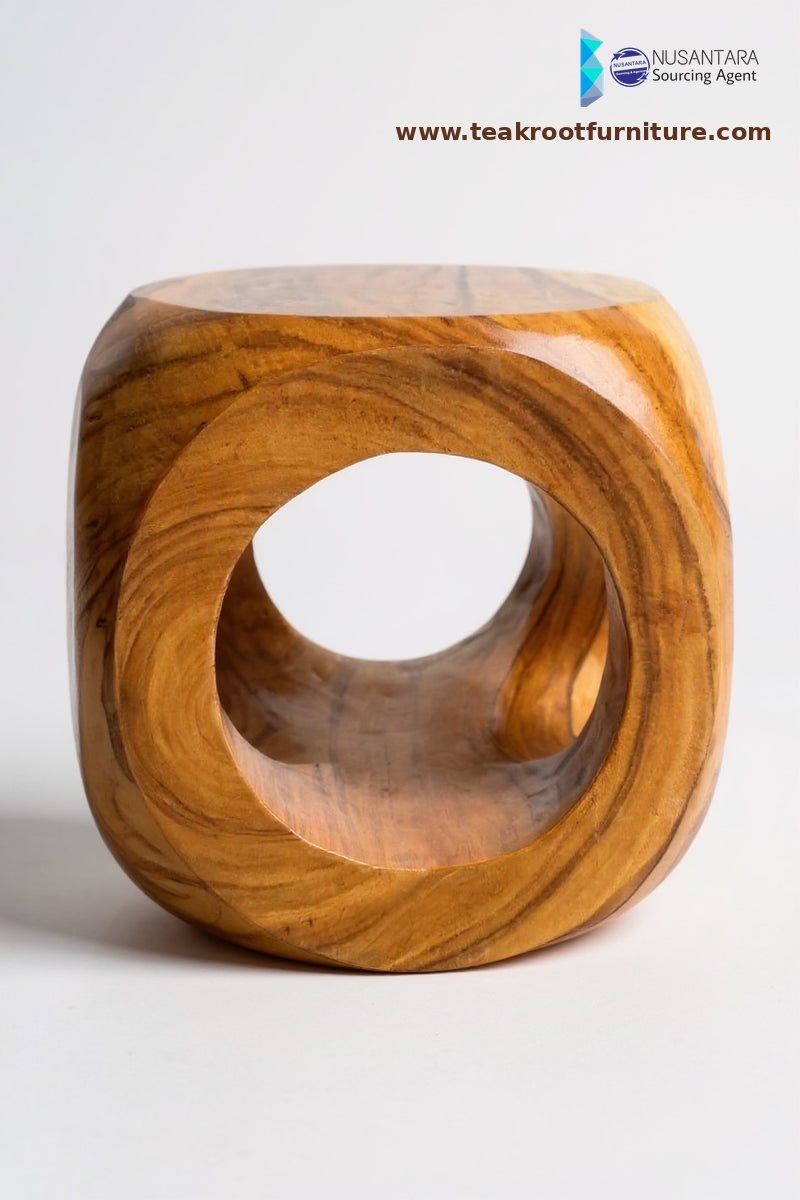
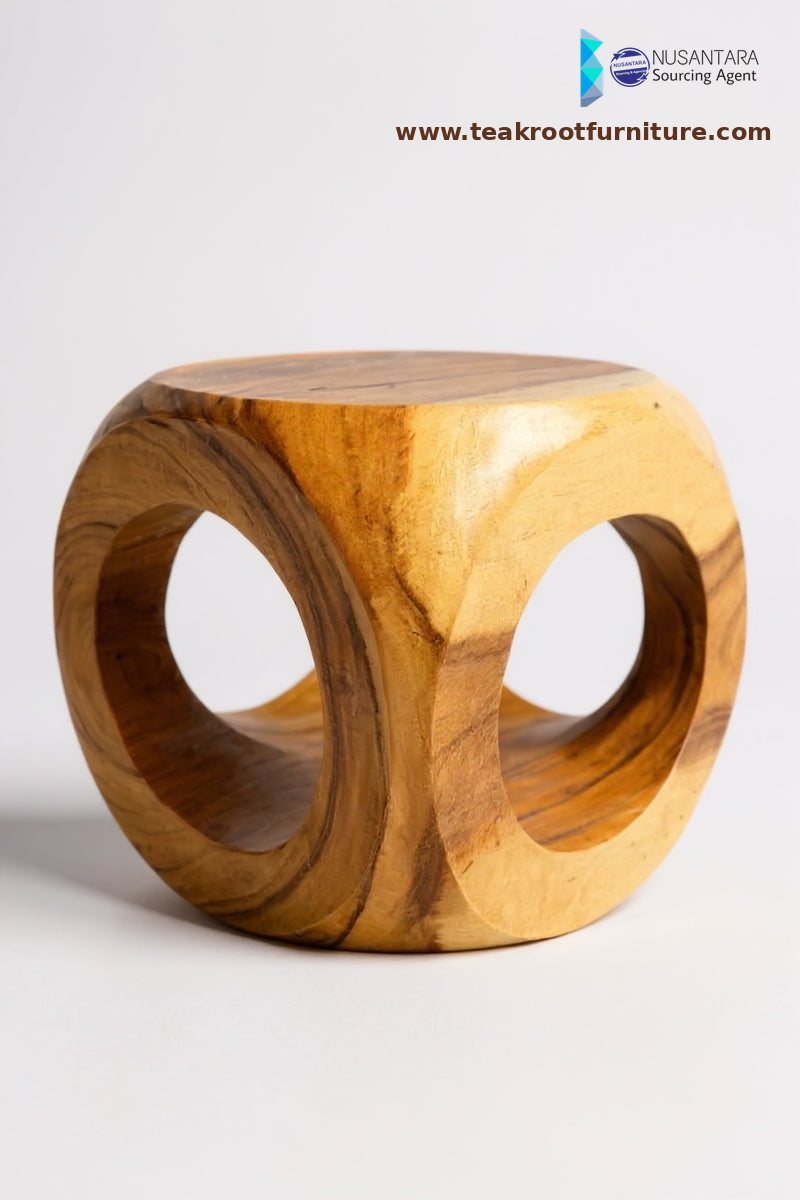
FACTORY DIRECTOEM & CUSTOMEXPORT READYMIXED CONTAINER
300+Containers Shipped Since 2016
4 x 40'FCLMonthly Capacity
1 x 20'FCLMinimum Mixed Container
12 WeeksTypical Lead Time
Manufacturer & Exporter of Teak Root Furniture · Established 2016 · Jepara, Indonesia · Shipping Worldwide
Teak Root Furniture Manufacturer for European Importers

Teak Root Furniture Manufacturer for European Importers

Handcrafted teak root furniture from Jepara, Indonesia. Indoor and outdoor collections for wholesale and export buyers.

Sculptural Teak Root Dining Tables

Sculptural Teak Root Dining Tables

Solid teak root and glass-top dining tables, produced to order and prepared for container shipment.

Organic Coffee and Side Tables

Organic Coffee and Side Tables

Natural root-base coffee and side tables — statement pieces for retail and interior projects.

Wholesale and Custom Production

Wholesale and Custom Production

Custom and OEM production for importers, retailers and hospitality projects worldwide.

Request Our Catalogue and Price List

Request Our Catalogue and Price List

Send us your target items and quantities — our team will prepare a quotation for you.

Showing posts with label Suar Wood Furniture. Show all posts

Saturday, November 7, 2026

Suar Wood Table Sizes: Seats, CBM and FOB Prices

A 120 cm round table is the most quoted size in this trade and the one that disappoints most often. At four covers it works. At six, it gives each diner about 63 cm of table edge — enough on paper, tight once the chairs have arms and someone sits at the end. The buyer usually discovers this from a photograph, three months after the container left Semarang.

The arithmetic that prevents the mistake is short: seats, packed volume, and FOB per seat. This page is the sizing sheet our production office in Jepara, Central Java, Indonesia works from when a hotel group or a retail buyer asks what fits in one 20-foot container. FOB figures come from our price list of November 2026, volumes are packed carton volumes, and the container figures use what we actually load — 28 CBM in a 20-foot and 65 CBM in a 40-foot high cube, against a nominal 33.2 and 76.3 CBM (ISO container data).

Solid wood dining table set with stools in a workshop, Jepara, Central Java, Indonesia

The sizing sheet: seats first, then millimetres

Seat count follows the perimeter, not the diameter, which is why two tables of similar width can seat different numbers. The allowance we work to is 60 cm of table edge per cover at a dining table, 70 cm where chairs have arms or the setting includes a bread plate and two glasses. Divide the perimeter by that number and round down, never up.

The table below is our current dining range with the packed volume and FOB price from the same list, plus the number of pieces we would plan into a container after allowing for the air that round tops leave behind. The last two columns are planning figures, not straight division — the reason is in the next section but one.

Model Seats (60 cm rule) Packed CBM FOB USD Per 20' Per 40'HC
Round 100 cm40.751953173
Round 120 cm4 (6 tight)1.082652251
Round 150 cm61.803401330
Round 200 cm82.43650922
Oval 200 × 100 cm6–81.503651536

Read the 120 cm line twice. At four covers it costs USD 66 per seat in FOB terms; at six it costs USD 44 a seat and 63 cm of elbow room. That is why the size sells and why it generates complaints: it is specified for six and used by four. If the client genuinely needs six, move to 150 cm and say so before the order, not after.

The 200 cm round is a different animal. Its top weighs about 94 kg before the base is fitted, it takes two people to move, and it needs roughly 3.6 m of clear room to pull chairs out. In a resort lobby that works. In a 22 m² apartment it is furniture you cannot walk around.

Height is a specification, not a preference

Heights sell less visibly than diameters and cause more returns. The working numbers we build to:

  • Dining tables: 75–78 cm. Below 74 cm a standard 45 cm chair seat leaves less than the 27–30 cm of clearance people expect under the apron.
  • Coffee tables: 40–45 cm, paired with a sofa seat of 42–45 cm, so the gap stays in the 15–25 cm band.
  • Console and side tables: 70–80 cm, so a lamp or a tray reads at hip height.
  • Counter-height tables: 90 cm, with a 65 cm stool seat.

The most common error we see is not a wild number but a CAD number: a table drawn at 72 cm because the drawing was scaled from a photograph. Three centimetres does not sound like much; it is the difference between a chair sliding under the apron and a chair that catches it, and nobody in the showroom can say why the setting feels wrong. Send us the chair, or its seat height, and we set the table height from that.

Ready to price a container? Send the room count, the chair seat height and the sizes you are considering, and we will come back with what fits in one load, the FOB Semarang price and a realistic lead time.

Send your item list for a quote →

Why a table is mostly air: CBM, cartons and the 85 percent rule

CBM is calculated on the carton, not on the furniture: length × width × height in metres, and that is the number the freight forwarder charges against. A 150 cm round table is 1.80 CBM in our list, which corresponds to a carton of roughly 1.60 × 1.60 × 0.70 m — the top, the base and about 5 cm of foam and board on every side. The timber in that table is only 0.09 m³. The rest is protection and air, and the buyer pays freight on all of it.

The gap between nominal and usable volume is the second thing buyers underestimate. A 20-foot container holds 33.2 m³ by the ISO figure and a 40-foot high cube 76.3 m³, but no carton fills the corners, the door frame or the space above an uneven stack. We plan 28 CBM into a 20-foot and 65 CBM into a 40-foot high cube, which is 84–85 percent of nominal. A forwarder quoting you on 33 CBM for a 20-foot is quoting a number the terminal will not accept.

Round tops waste more than square ones because they do not nest. Between two rows of circular cartons there is a lens of empty space that nothing rectangular will fill. That is why we plan 85 percent of usable volume for round tables and fill the remainder with stools, planters and consoles — pieces that absorb the gaps and carry a better value per cubic metre than another table.

How many tables fit: a 30-room load plan, priced

Straight division flatters the plan. Twenty-eight cubic metres divided by 1.80 suggests fifteen 150 cm tables; at a realistic 85 percent packing factor it is thirteen, and a container forced to fifteen arrives with damaged edges. Below is a plan we actually quoted for a 30-room boutique hotel — nine larger tables for the dining room, smaller ones for terraces and suites, stools for the bar, planters for the entrance.

Item Qty CBM each Total CBM FOB each FOB total
Round dining table 150 cm91.8016.203403,060
Round dining table 120 cm81.088.642652,120
Stools, mixed models400.052.00421,680
Planters, 40–60 cm200.061.2030600
One 20-foot, mixed——28.04—7,460

Two checks before this plan goes to production. First, weight: those tables, stools and planters come to about 1.9 t, against a cargo limit near 21.6 t for a 20-foot container. On this product volume always binds before weight, which is why a 6 cm top costs you money in the piece and in handling, not in freight. Second, the packing list: every line needs the model code, the finish and the quantity, because a mixed container is loaded in the order the list is written.

Teak root table base packed for export beside a finished top, Jepara, Indonesia

Thickness, weight and the cost per seat nobody calculates

Suar tops are normally 4–6 cm. Dried suar averages about 600 kg/m³ (The Wood Database), so the arithmetic is easy: a 150 cm round at 5 cm is 0.088 m³ of timber, about 53 kg; at 6 cm it is 64 kg. Neither threatens a container; both matter to the people who move the table.

Thickness is also where slab and glued tops part company. A single slab shows one continuous grain and cannot be repeated; a glued top is more stable, cheaper, and the only way to get a 240 cm width. Suar moves little in service — 2.0 percent radial and 3.4 percent tangential shrinkage from green to oven-dry (The Wood Database) — but a wide top fixed hard to a rigid base will still split at the joint, which is why the fixing method matters more than the thickness.
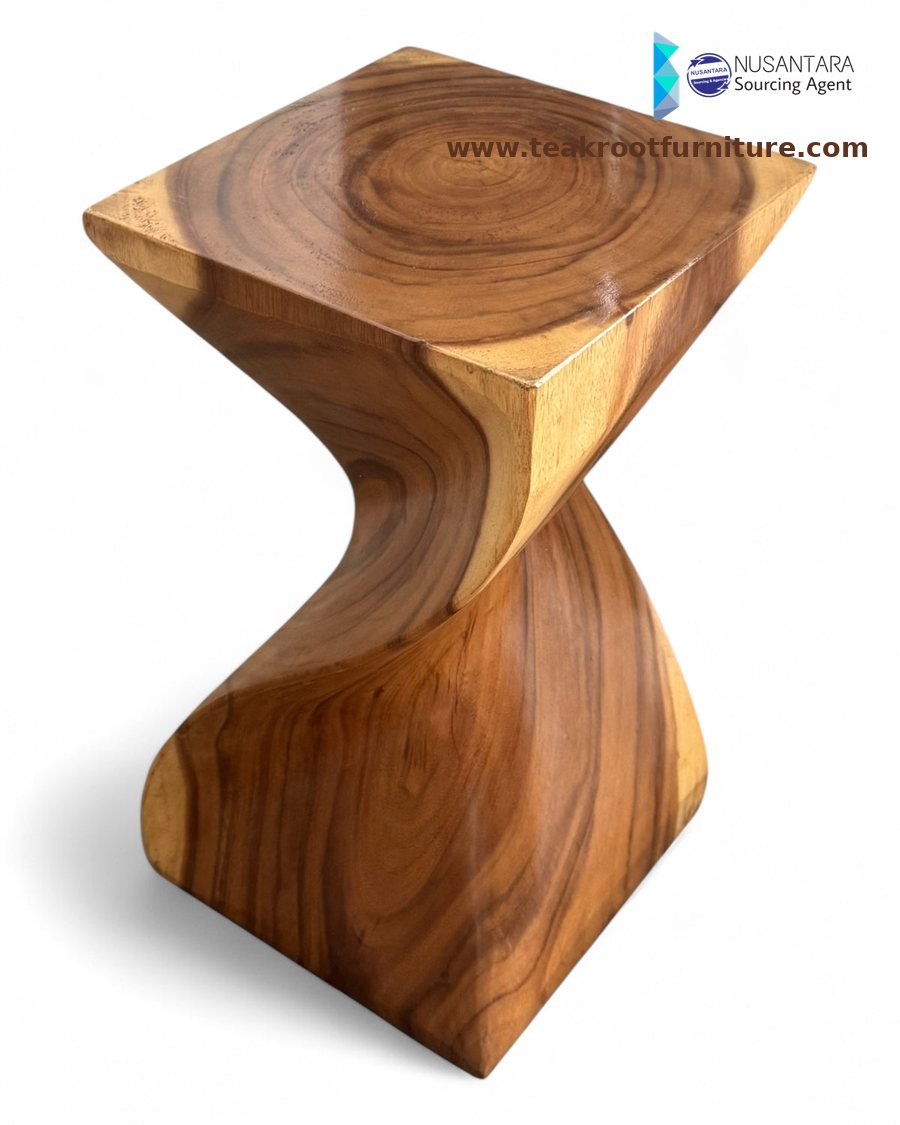
Solid suar wood stool with visible grain, finished in the Jepara workshop, Central Java, Indonesia

The number buyers rarely run is FOB per seat. At list prices: 100 cm is USD 49 a seat, 150 cm is USD 57, 120 cm is USD 66, and the 200 cm round is USD 81. The 120 cm is the worst of both worlds on paper — the highest price per cover in the range and the size most likely to be used by four people — yet it remains the default order. If your client list is couples and small families, the 100 cm is cheaper and easier to place; if it is groups, go to 150 cm and stop pretending the 120 cm seats six.

FOB is not the landed price: three borders, three numbers

FOB Semarang is where our responsibility ends and your cost calculation begins. Duty is charged on CIF (goods + freight + insurance), and VAT is charged on CIF plus duty, so a bulky table that costs little per cubic metre still carries a freight and tax multiplier. Using the same USD 340 table and an illustrative freight plus insurance of 25 percent of FOB — replace it with your forwarder's figure — the border looks like this:

Destination Duty Local tax Border cost on USD 340
United States, HTS 9403.60.80FreeState sales tax at retail≈ USD 1.50 merchandise processing fee (0.3464%, floor and ceiling per entry apply); harbour fee on freight
Chile6%19% VAT≈ USD 111
Uruguay16.2%22% VAT≈ USD 178

The US line is duty free for wooden furniture under HTS 9403.60.80 (USITC, 2026); the Chilean and Uruguayan rates are the published tariff and VAT on the same six-digit line, 9403.60, as recorded against each customs service in the ArancelLatam tariff table (verified September 2026). Port handling, clearance and inland haulage come on top and vary by terminal, which is why the honest comparison between two suppliers is landed cost per seat, not FOB per table.

Where suar comes from, and the two questions that decide quality

Suar is Albizia saman, the rain tree; in Java it is called trembesi. It grows 15–25 m tall with a crown up to 30 m across, and it was planted along roads and in villages around Kudus and Demak — the regencies next to Jepara — long before anyone thought of it as furniture timber. The logs are plantation and roadside trees, not forest trees, which is one reason the species is priced below teak root and well below teak.

Its working properties are the reason it suits big tops: average dried weight around 600 kg/m³, Janka hardness about 900 lbf, and low shrinkage, so a 240 cm top stays flat if it was dried properly and fixed with allowance for movement (The Wood Database). It is also softer than teak, which matters on a hotel dining table that meets cutlery and cleaning chemicals four times a day. A hardwax oil finish, renewed annually, is our standard recommendation for contract use.

Two questions separate the workshops that understand timber from the ones that only understand prices. Was the top kiln-dried before machining, and to what moisture content? For export, we work to 8–12 percent; a top machined at 18 percent will arrive in a European winter and shrink into a cup. How is the top fixed to the base? If it is screwed down hard with no slotted holes or buttons, the first dry season will find the weakest point in the grain.

Making the first order safe

A first order does not need to be a container of one model. Our minimum is one 20-foot container, mixed, with no minimum per model — which lets a buyer test four sizes, two finishes and a stool in the same shipment. Lead time on a first order runs about 12 weeks: drying and machining are the long part, and rushing the kiln is how tables arrive at 16 percent moisture. Payment is 50 percent deposit with the balance before shipment.

What makes the order safe is the paperwork before production: a spec sheet in millimetres with tolerances written down (±5 mm on tops, ±3 mm on height), the chair height you are pairing with, a finish sample approved by photograph or courier, and a packing list agreed line by line. Buyers are welcome to inspect in Jepara before loading; the factory and the office are at the same address on every document we issue.

Frequently asked questions

How many 120 cm suar tables fit in a 20-foot container?

Twenty-two, planned. Each is 1.08 CBM packed, and we load about 28 CBM into a 20-foot, then apply an 85 percent factor because round cartons do not nest. Straight division suggests 25 or 26.

Why is a 150 cm round table 1.80 CBM when the timber in it is only about 0.09 m³?

Because freight is charged on the carton. The packed carton is roughly 1.60 × 1.60 × 0.70 m — 5 cm of foam and board around a 150 cm top, plus the base stacked underneath. That is 1.79 m³, rounded to 1.80 in the price list, and it is the number your forwarder will use.

Can I mix 100, 120 and 150 cm tables with stools in one container?

Yes — that is the normal first order. A worked example is in the load plan above: 9 tables at 150 cm, 8 at 120 cm, 40 stools and 20 planters total 28.04 CBM and about USD 7,460 FOB. The constraint is volume, not weight; the shipment weighs under 2 t against a limit near 21.6 t.

Does a 6 cm top instead of 5 cm change my freight cost?

Barely. One extra centimetre of carton height on a 70 cm carton is about 1.4 percent more volume, or roughly USD 1–2 per table at typical freight rates. What it does change is weight — about 11 kg on a 150 cm top — and the FOB price, because it is more timber and more machining. Specify thickness for the look and the load, not to save freight.

Talk to us about your project

Send us the room schedule, the chair you are pairing with and the finishes you are considering. We will reply with the sizes that fit, the packed volume, the FOB Semarang price and a load plan you can forward to your broker — usually within one working day.

Send your item list for a quote →

Packing, loading and shipping

Container being loaded with packed teak root and suar wood furniture, Jepara, Indonesia

Each top is wrapped in foam and board, corners reinforced, and packed in a single-face carton with the base in its own carton beneath it. Tops ship flat, never on edge. We stack by model so the load plan and the packing list match, photograph every row as it goes in, and hand the forwarder a loading sequence that puts the pieces needed first at the door. Buyers who want their own inspector on site are welcome; we book the slot and provide the packing list in advance.

Where does the container actually leave from? It is loaded at our workshop in Jepara, on the north coast of Central Java, about 65–70 km and roughly two hours by road from the port of Semarang. Every piece is checked against the packing list before it goes on the truck, the container is sealed at the factory, and FOB Semarang is the term we quote as standard.

Our office and factory stand at the same address on every document we issue: Jl. RA Rukmini KM.02 Pekalongan RT.02/V, Tahunan, Jepara 59428, Central Java, Indonesia.

MOQ 1×20'FCL mixed · 4×40'FCL per month · 300+ containers shipped since 2016 · export@teakrootfurniture.com

Written by

Mr. August Praymunor — Overseas Marketing Director

CV. Nusantara Sourcing Agent · manufacturer and exporter of teak root and suar wood furniture in Jepara, Central Java, Indonesia, with over 300 containers shipped since 2016.

export@teakrootfurniture.com · WhatsApp +62 852 0600 7878 · LinkedIn
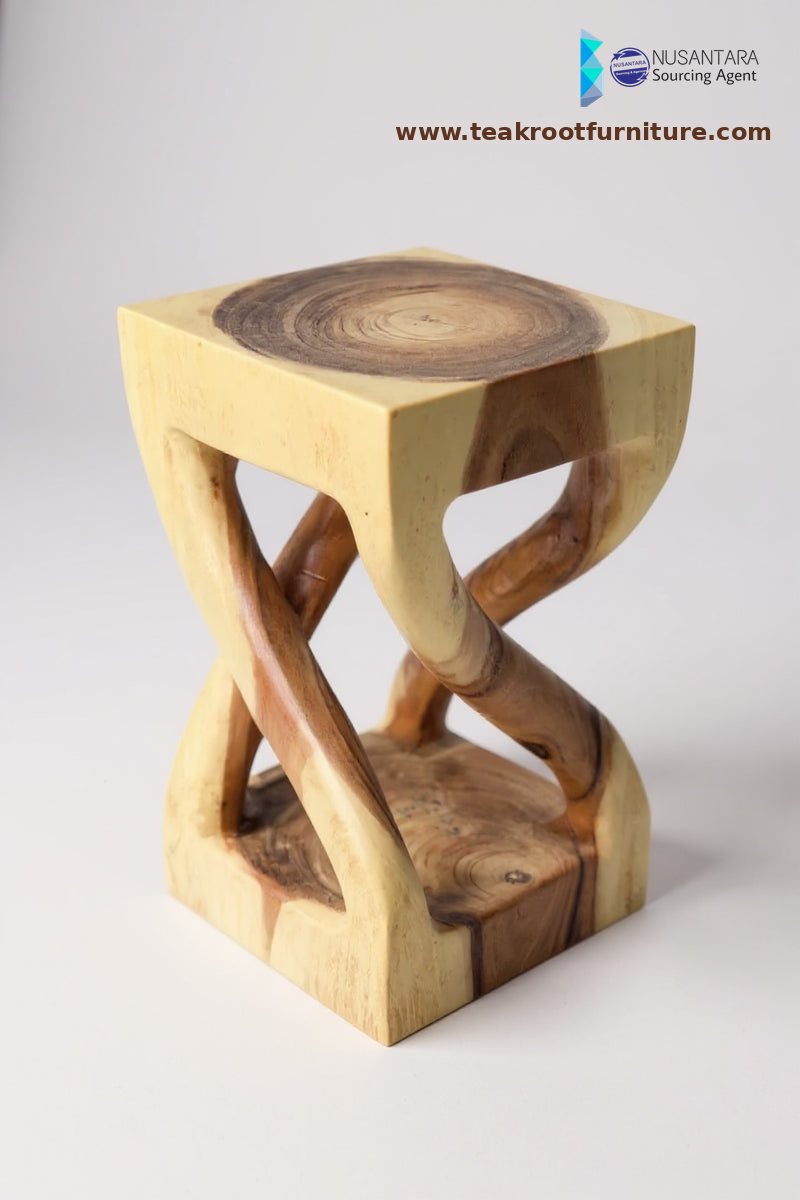
See also

Share this page:>

Suar Wood vs Teak: Which One Should an Importer Choose?

Most importers meet both names in the same inbox: a supplier offers "suar wood furniture" and "teak root furniture", the photos look similar, and the prices do not. The difference is not cosmetic. Suar and teak are different species with different behaviour in production, and choosing the wrong one for a project shows up later as a matching problem, a finish problem or a freight problem.

Suar wood stool with natural finish, Jepara, Indonesia
Solid suar wood stool, single-piece base, Jepara

Suar wood is Samanea saman (trembesi), a fast-growing Javanese hardwood that machines into repeatable sizes; teak is Tectona grandis, denser and oilier, and teak root furniture is made from the root mass, so every piece is unique. Choose suar when you need identical dining tables, stools or planters repeated across a project; choose teak root when the piece itself is the design. Both ship FOB Semarang from our Jepara workshop, in mixed 20-foot containers, at about 12 weeks on a first order.

Last updated: 8 November 2026

The short answer, by project type

If your project is... Specify Why
Hotel or resort with repeated roomsSuarSame model, same size, next phase matches
Restaurant with one statement tableTeak rootThe shape is the product, one-off is an advantage
Retail range that must reorderSuarRepeatable SKUs, stable packing, predictable CBM
Lobby, showroom, galleryTeak rootSculptural pieces carry a room
Garden and terrace in full sunTeak rootProven outdoors; suar needs covered siting and annual oil

Species, in one paragraph each

Suar. Samanea saman, known locally as trembesi, is a shade tree with a wide trunk and interlocking grain. It is cut into boards, dried, and machined, which is exactly why it can produce a 120 cm round top with a clean centre and forty identical stools. Colour runs from pale gold to a deeper honey brown, and the grain is calmer than root stock.

Teak. Tectona grandis is the timber the market knows by name, and it is genuinely more resistant outdoors because of its natural oils. Teak root furniture is a different proposition again: the root is dug, cleaned, dried and finished as a single sculptural piece, so the furniture is one of a kind and the price reflects the hunt for the shape.

Where the money actually differs

Per piece, teak root starts lower: small side pieces from USD 28 and coffee tables from USD 90, but statement tables run to USD 650 because each one is unique. Suar sits in a narrower band: stools USD 38-55 at 0.05 CBM, planters USD 20-38, and round dining tables USD 195-340 at 0.75-1.80 CBM.

The comparison only makes sense per CBM. A 150 cm suar table occupies 1.80 CBM, so a 27.6 CBM container takes about fifteen of them; the same container takes well over a hundred stools. This is why suar orders are usually built as a triangle: a few tables, many stools, planters to fill the balance.

Moisture, movement and finish

Both species move with humidity, and both are kiln-dried before machining in our workshop. Suar moves more visibly across a wide top, which is why the drying schedule and the finish matter more than the species name. Teak root is stabilised by its own irregular shape and by the way it is finished; the trade-off is that two pieces never look alike, so a colour-matched set is not on the table.

What buyers get wrong most often

  • Asking for a suar wood table and expecting teak look. Suar is warmer and lighter in tone; if the client saw a teak photo, say so before the sample is approved.
  • Mixing both programs in one SKU list. Keep them as two lines with two prices and two lead times; the load plan is different.
  • Assuming certification. We do not hold FSC or SVLK, so any tender that requires certified timber is out of scope — say it early rather than at the documents stage.
  • Treating suar as indoor-only or teak root as indoor-only. Both work outdoors with the right finish; the difference is maintenance, not suitability.

The one question that settles it

Ask yourself: will the buyer order this piece again next season? If yes, it is suar, because the second order can match the first. If the answer is "we only need one, and it has to be the centrepiece", it is teak root. Most of our importers end up running both, which is why our price list carries both lines and why a mixed container is the normal way to buy.

Frequently asked questions

Is suar wood as strong as teak?

Both are hardwoods used for furniture. Teak carries more natural oil and is the safer choice for fully exposed outdoor work; suar performs well indoors and outdoors under cover, provided the finish is maintained.

Can I mix suar and teak root in one container?

Yes, and most buyers do. Mixed models are allowed with a minimum of one 20-foot container; the load plan simply has to account for the different CBM per piece.

Which is cheaper per container?

Suar is usually cheaper per usable piece because the sizes repeat and the packing is predictable. Teak root is cheaper per statement piece, but the pieces are unique and the CBM varies.

Do you hold FSC or SVLK certification?

No. We supply origin and species documents per shipment, but we do not claim certified timber.

Not sure which line fits your project? Send the room list and sizes; we will tell you honestly which material serves it and what fits in one container.

Send your item list for a quote →

See also

See the full catalogue and price list →

Written by

Mr. August Praymunor — Overseas Marketing Director

CV. Nusantara Sourcing Agent · manufacturer and exporter of teak root and suar wood furniture in Jepara, Central Java, Indonesia, with over 300 containers shipped since 2016.

export@teakrootfurniture.com · WhatsApp +62 852 0600 7878 · LinkedIn
Share this page:>

Suar Wood Dining Tables, Stools and Planters from Jepara

Suar wood is the material most importers end up specifying for the pieces a teak root collection cannot carry on its own: matching dining tables, stools that stack, and planters that repeat across a hotel floor. Suar (Samanea saman) grows across Java, takes a wide, stable slab far more readily than root stock, and machines to consistent dimensions, which is why a container can be filled with one model instead of forty unique pieces.

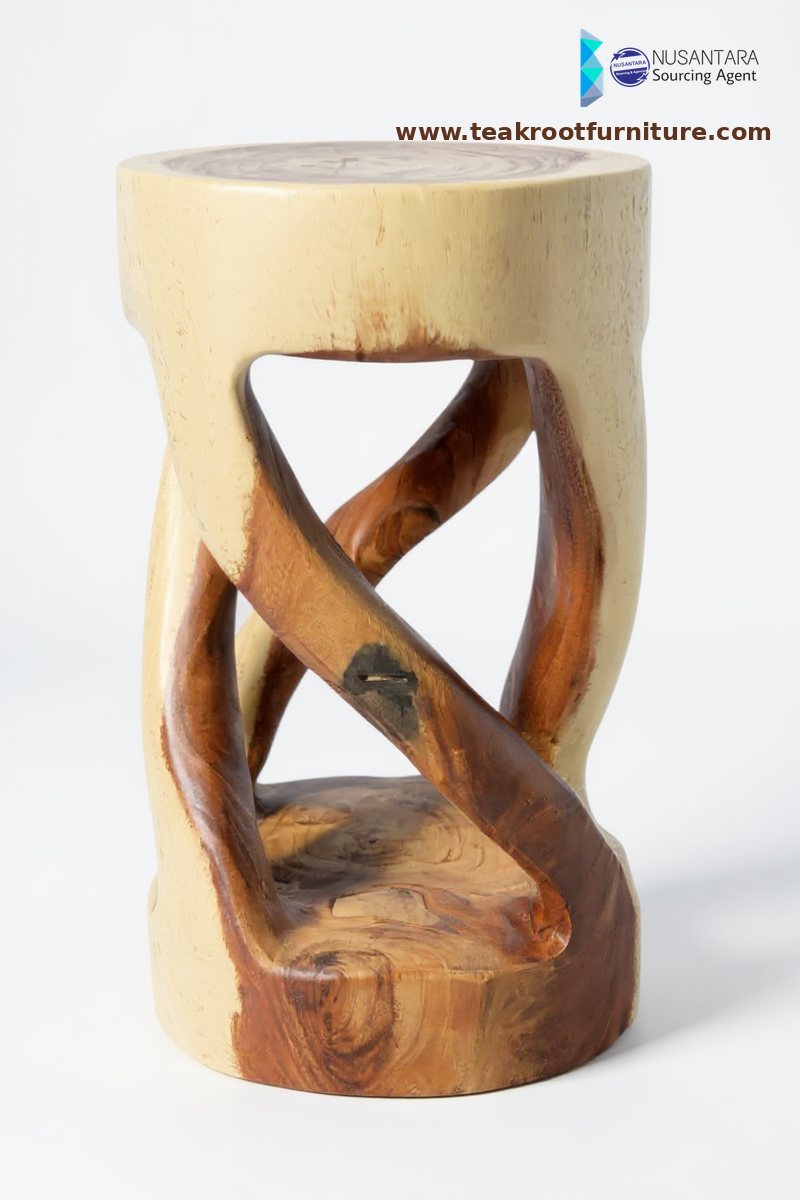
Suar wood stool with sculptural base, Jepara, Indonesia
Suar wood planter hand-finished in Jepara, Indonesia
Solid suar wood stool for hotel projects, Jepara
Suar wood planter with natural edge, Jepara, Indonesia

We manufacture suar wood dining tables, stools and planters in Jepara, Indonesia, and ship them FOB Semarang in mixed 20-foot containers. Round suar dining tables run from USD 195 to 340 per piece (100, 120 and 150 cm), stools from USD 38 to 55, and planters from USD 20 to 38 depending on diameter. Minimum order is one 20-foot container with mixed models, capacity is 4 x 40'FCL per month, and a first order takes about 12 weeks.

Last updated: 8 November 2026

What suar wood actually is, and why buyers confuse it with teak

Suar is Samanea saman, known in Indonesia as trembesi: a fast-growing shade tree with a wide trunk and an interlocking grain. It is not teak, and it is not teak root. Teak (Tectona grandis) is a different species with different density, colour and machining behaviour, and teak root furniture is made from the below-ground root mass, so every piece is one of a kind.

In the export trade the confusion is common because both are sold as "Indonesian hardwood". For a buyer the practical difference matters: suar gives you repeatable sizes and matched sets, while teak root gives you sculptural one-offs. Several of our importers run both in the same container, using suar for the dining and stool program and teak root for accent pieces.

Why dining tops are the natural home for suar

A dining top needs a flat, wide, stable surface. Root stock resists that, because the shape is the product. Suar sawn timber takes a round top from 100 to 150 cm in our current list without glue lines running through the centre, and takes a rectangular top when the project asks for one and the board is available.

Three things make it work in a commercial order:

  • Repeatability. A hotel with 40 rooms can order 40 identical tables, not 40 variations of a theme.
  • Machinability. Legs, aprons and tops are cut to dimension, so a repair or a second phase matches the first.
  • Finishing control. The same sanding schedule and the same finish can be applied across the whole run.

Suar dining tables: sizes, freight and FOB prices

These are figures from our current price list, not estimates. All are FOB Semarang, per piece, before freight, insurance and import duty.

Model Top Height CBM/piece FOB USD
Cabak dining table100 cm round75 cm0.75195
Cabak dining table120 cm round75 cm1.08265
Cabak dining table150 cm round75 cm1.80340

Freight is where the model choice bites. A 20-foot container carries roughly 27 to 28 CBM of packed furniture, so the 150 cm table takes about 15 pieces to fill a box, while the 100 cm model takes closer to 36. If a buyer needs volume at a lower landed cost, the smaller top usually wins; if the project is a restaurant with large tables, the 150 cm model carries the design.

Stools: the item that pays for its own freight

Suar stools run USD 38 to 55 FOB at about 0.05 CBM each, which means one 20-foot container absorbs several hundred pieces without touching the dining program. That ratio is why stools are the first suar item most importers add: they fill the gaps around the tables, they are light to handle, and they can be nested in the load plan.

We produce them as solid one-piece seats or with a sculpted base, in two finishes: a light natural tone and a deeper brown. Because they are machined rather than root-shaped, a repeat order matches the first delivery.

Planters and pots: the accessory line that fills the container

Suar planters and flower pots run USD 20 to 38 FOB at 0.04 to 0.13 CBM. They are cut from the same boards as the table tops, so the colour and grain read as one family across a project. Interior planters are finished like furniture; exterior planters need a drainage hole, a liner and a finish that is re-oiled once a year.

For hotel and resort projects, planters are usually the piece that makes a container commercially viable: they bring the load factor up without adding much weight, and they let a buyer test a market with a small spend.

Suar against teak root: how to decide

Question Suar wood Teak root
Best forMatched dining sets, stools, planters, contract volumesStatement tables, consoles, one-off accent pieces
RepeatabilitySame model, same size, next orderEvery piece differs by nature
SizesRound 100-150 cm, rectangular on requestDriven by the root, usually 90-200 cm
Price signalStools from USD 38, dining from USD 195Entry pieces from USD 28, statement tables to USD 650
Container logicVolume through stools and plantersVolume through coffee and side tables

Drying, machining and finish

Suar moves while it dries, so the schedule matters more than the species. Our boards are kiln-dried before machining, then sanded and finished by hand. A closed-pore, matte finish suits interiors; a penetrating oil suits covered outdoor use. We agree the finish on a physical sample before production, and we keep that sample on file so the next order matches.

One honest caveat: suar is a natural material, so colour varies from board to board and the grain can include small knots and mineral streaks. If a project needs a single uniform colour, that has to be agreed up front and it costs more, because it means selecting boards.

Packing, documents and loading

Stools and planters travel in single-face cartons; table tops travel in cradles with corner protection, and legs are packed separately to keep the top flat. All packing timber is heat-treated and stamped to ISPM 15. Documents per shipment: commercial invoice, packing list, bill of lading, and a certificate of origin on request. We do not hold FSC or SVLK certification, so we do not describe our suar or teak as certified.

A worked container: what a suar order actually looks like

Buyers often ask for a container "mixed with everything". It is easier to decide with a real mix in front of you. Take a 20-foot container of about 27.6 CBM packed, a hotel project with 30 rooms and a restaurant:

  • 12 dining tables at 120 cm × 1.08 CBM = 12.96 CBM, USD 3,180 FOB.
  • 60 stools × 0.05 CBM = 3.00 CBM, USD 2,280 to 3,300 FOB depending on the model.
  • 40 planters × 0.06 CBM average = 2.40 CBM, USD 800 to 1,520 FOB.
  • Balance left roughly 9 CBM, which is where teak root coffee tables or consoles go, because those pieces are what make the project look designed rather than furnished.

That mix carries a suar wood table program, a seating program and an accessory program in one shipment, with one set of documents and one freight bill. It is also the reason we ask for the intended room list rather than a single model: the load plan decides whether the order is profitable, not the unit price.

Care and maintenance, in plain terms

Interior suar needs very little: dust, a damp cloth, and a re-oil every twelve to eighteen months if the surface looks dry. Avoid silicone polishes and avoid leaving standing water on a top. Outdoors, under a roof, re-oil once a year before the wet season; fully exposed, expect the timber to silver and plan for annual maintenance or a cover.

Planters need drainage. A pot without a hole becomes a water bowl, and no finish survives that. We drill drainage on request and can supply a liner.

What to send us for a quote

Three things shorten a quote from days to hours: the room list (what the piece is for), the sizes you need repeated, and the port you ship to. If you already have a reference photo, send it with the sizes marked — it is faster than a description, and it lets us tell you honestly whether the shape works in suar or whether it should be teak root.

Send those three things and you get back a load plan, the volume in CBM, the FOB Semarang price per model, and the lead time for that specific mix.

Frequently asked questions

Is suar wood the same as teak?

No. Suar is Samanea saman, a fast-growing Javanese hardwood also called trembesi; teak is Tectona grandis. They differ in density, grain and behaviour, and they are sold as separate programs.

Can suar be used outdoors?

Yes, with the right finish and hardware, and with re-oiling once a year. For a fully exposed site we usually recommend teak root or a covered position instead.

What is the minimum order?

One 20-foot container, mixed models allowed. There is no minimum per model, so a first order can be 10 dining tables, 60 stools and 40 planters.

How long does the first order take?

About 12 weeks from deposit, with 50 percent on order and the balance against the bill of lading copy.

Need a landed-cost estimate for suar? Send the models, sizes and quantities and we will confirm what fits in one container with the FOB Semarang price and a realistic timeline.

Send your item list for a quote →

See also

See the full catalogue and price list →

Written by

Mr. August Praymunor — Overseas Marketing Director

CV. Nusantara Sourcing Agent · manufacturer and exporter of teak root and suar wood furniture in Jepara, Central Java, Indonesia. We have shipped over 300 containers since 2016, loading 4×40’FCL per month for importers, hotel groups and interior contractors in Europe and North America.

export@teakrootfurniture.com · WhatsApp +62 852 0600 7878 · LinkedIn · Jl. RA Rukmini KM.02 Pekalongan RT.02/V, Tahunan, Jepara 59428, Central Java, Indonesia.
Share this page:>