


Most importers meet both names in the same inbox: a supplier offers "suar wood furniture" and "teak root furniture", the photos look similar, and the prices do not. The difference is not cosmetic. Suar and teak are different species with different behaviour in production, and choosing the wrong one for a project shows up later as a matching problem, a finish problem or a freight problem.
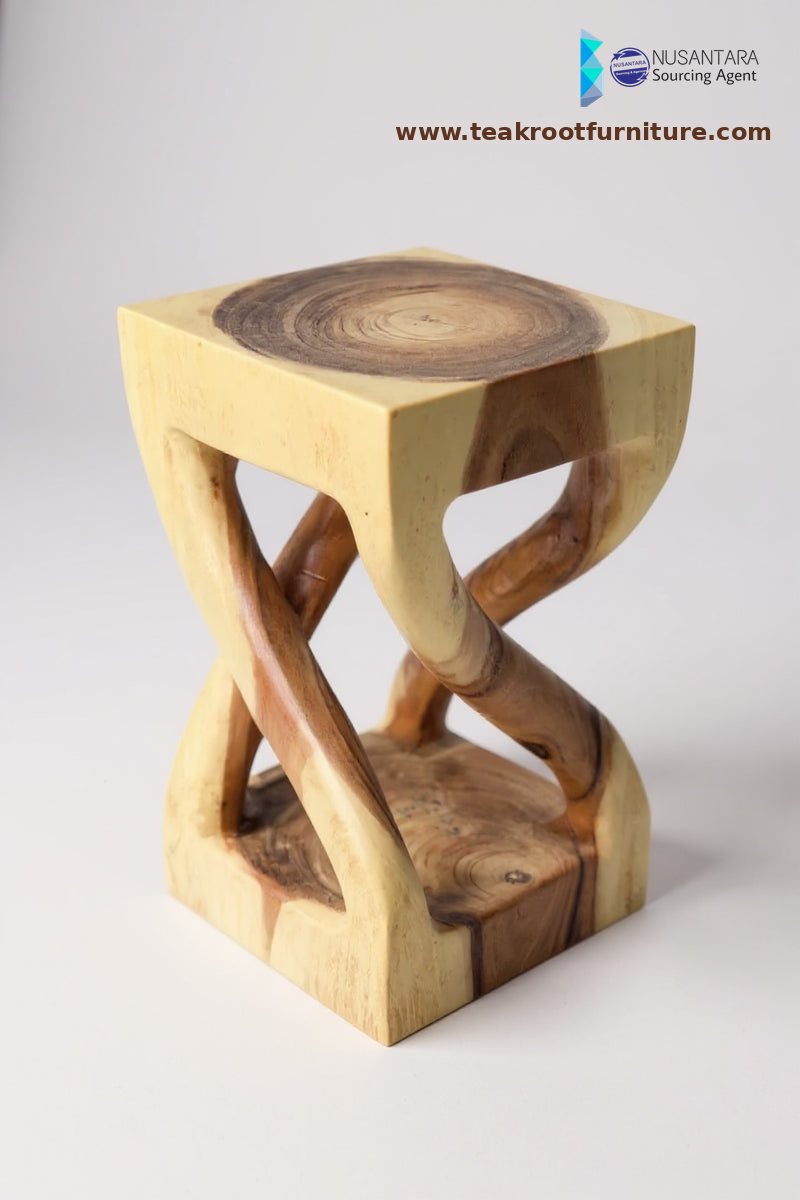
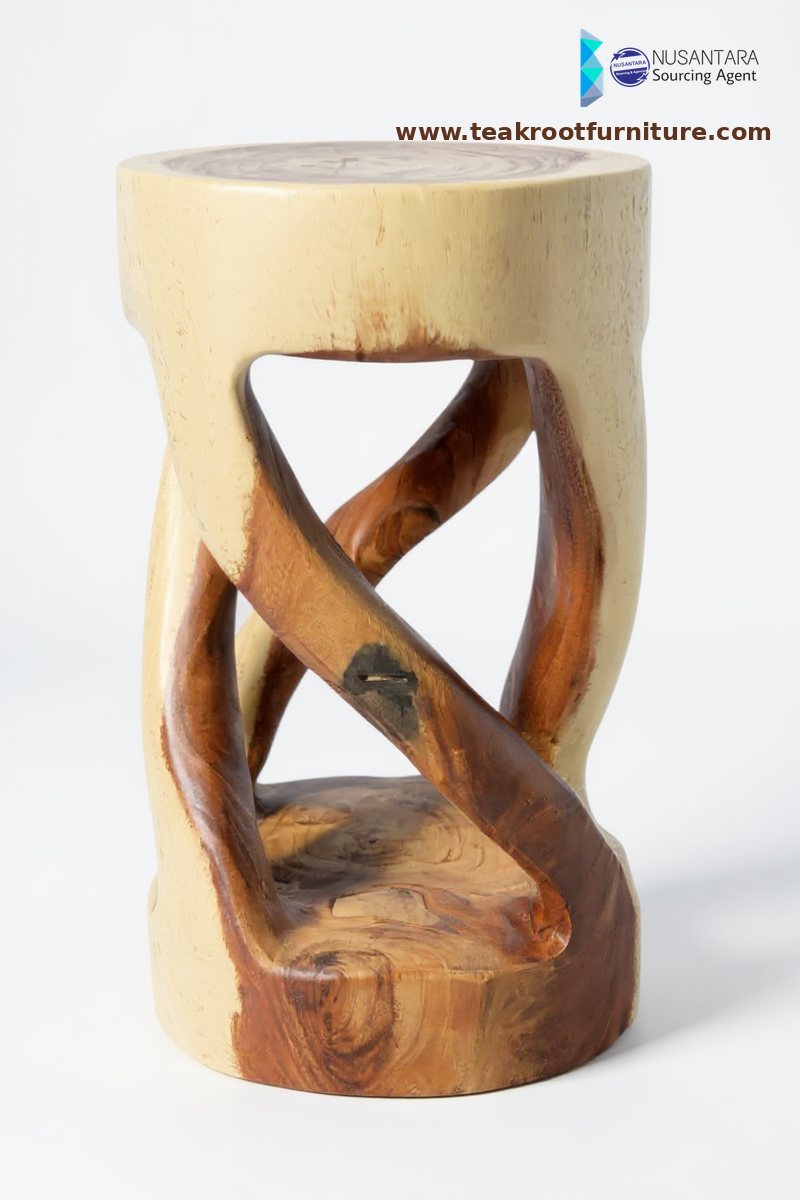
Suar wood is Samanea saman (trembesi), a fast-growing Javanese hardwood that machines into repeatable sizes; teak is Tectona grandis, denser and oilier, and teak root furniture is made from the root mass, so every piece is unique. Choose suar when you need identical dining tables, stools or planters repeated across a project; choose teak root when the piece itself is the design. Both ship FOB Semarang from our Jepara workshop, in mixed 20-foot containers, at about 12 weeks on a first order.
Last updated: 8 November 2026
The short answer, by project type
| If your project is... | Specify | Why |
|---|---|---|
| Hotel or resort with repeated rooms | Suar | Same model, same size, next phase matches |
| Restaurant with one statement table | Teak root | The shape is the product, one-off is an advantage |
| Retail range that must reorder | Suar | Repeatable SKUs, stable packing, predictable CBM |
| Lobby, showroom, gallery | Teak root | Sculptural pieces carry a room |
| Garden and terrace in full sun | Teak root | Proven outdoors; suar needs covered siting and annual oil |
Species, in one paragraph each
Suar. Samanea saman, known locally as trembesi, is a shade tree with a wide trunk and interlocking grain. It is cut into boards, dried, and machined, which is exactly why it can produce a 120 cm round top with a clean centre and forty identical stools. Colour runs from pale gold to a deeper honey brown, and the grain is calmer than root stock.
Teak. Tectona grandis is the timber the market knows by name, and it is genuinely more resistant outdoors because of its natural oils. Teak root furniture is a different proposition again: the root is dug, cleaned, dried and finished as a single sculptural piece, so the furniture is one of a kind and the price reflects the hunt for the shape.
Where the money actually differs
Per piece, teak root starts lower: small side pieces from USD 28 and coffee tables from USD 90, but statement tables run to USD 650 because each one is unique. Suar sits in a narrower band: stools USD 38-55 at 0.05 CBM, planters USD 20-38, and round dining tables USD 195-340 at 0.75-1.80 CBM.
The comparison only makes sense per CBM. A 150 cm suar table occupies 1.80 CBM, so a 27.6 CBM container takes about fifteen of them; the same container takes well over a hundred stools. This is why suar orders are usually built as a triangle: a few tables, many stools, planters to fill the balance.
Moisture, movement and finish
Both species move with humidity, and both are kiln-dried before machining in our workshop. Suar moves more visibly across a wide top, which is why the drying schedule and the finish matter more than the species name. Teak root is stabilised by its own irregular shape and by the way it is finished; the trade-off is that two pieces never look alike, so a colour-matched set is not on the table.
What buyers get wrong most often
- Asking for a suar wood table and expecting teak look. Suar is warmer and lighter in tone; if the client saw a teak photo, say so before the sample is approved.
- Mixing both programs in one SKU list. Keep them as two lines with two prices and two lead times; the load plan is different.
- Assuming certification. We do not hold FSC or SVLK, so any tender that requires certified timber is out of scope — say it early rather than at the documents stage.
- Treating suar as indoor-only or teak root as indoor-only. Both work outdoors with the right finish; the difference is maintenance, not suitability.
The one question that settles it
Ask yourself: will the buyer order this piece again next season? If yes, it is suar, because the second order can match the first. If the answer is "we only need one, and it has to be the centrepiece", it is teak root. Most of our importers end up running both, which is why our price list carries both lines and why a mixed container is the normal way to buy.
Frequently asked questions
Is suar wood as strong as teak?
Both are hardwoods used for furniture. Teak carries more natural oil and is the safer choice for fully exposed outdoor work; suar performs well indoors and outdoors under cover, provided the finish is maintained.
Can I mix suar and teak root in one container?
Yes, and most buyers do. Mixed models are allowed with a minimum of one 20-foot container; the load plan simply has to account for the different CBM per piece.
Which is cheaper per container?
Suar is usually cheaper per usable piece because the sizes repeat and the packing is predictable. Teak root is cheaper per statement piece, but the pieces are unique and the CBM varies.
Do you hold FSC or SVLK certification?
No. We supply origin and species documents per shipment, but we do not claim certified timber.
Not sure which line fits your project? Send the room list and sizes; we will tell you honestly which material serves it and what fits in one container.
Send your item list for a quote →
See also
- Suar wood dining tables, stools and planters from Jepara
- Teak root dining tables for importers and retailers
- Teak root stools and seating wholesale
- Full range with FOB prices
See the full catalogue and price list →
Written by
Mr. August Praymunor — Overseas Marketing Director
CV. Nusantara Sourcing Agent · manufacturer and exporter of teak root and suar wood furniture in Jepara, Central Java, Indonesia, with over 300 containers shipped since 2016.
export@teakrootfurniture.com · WhatsApp +62 852 0600 7878 · LinkedIn
0 comments:
Post a Comment